
Care, simply
put.
Wash by hand. Dry the same day. Re-oil when the wood looks thirsty. That's most of it, the rest is below, for the days you want to do it thoroughly.
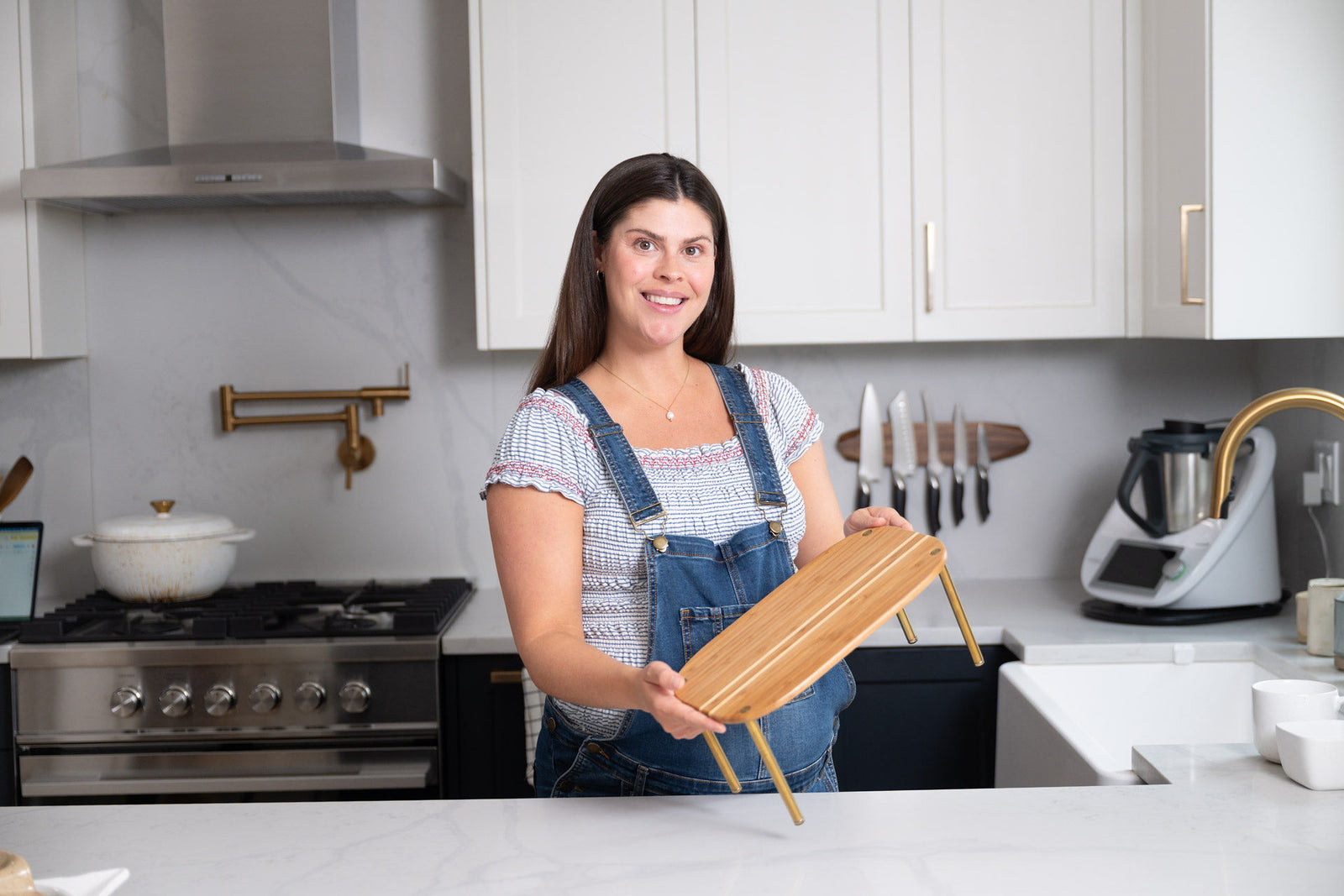
Hand wash.
Warm water, mild dish soap, soft cloth. Never the dishwasher — heat and standing water will warp the panel.
Dry upright.
Towel dry, then stand on edge for an hour. Air on both sides keeps the grain even.
Re-oil twice a year.
Roughly every six to twelve months. Oil sooner if the wood looks pale, lighter if it's shaded from the sink.
Avoid standing water.
A wet glass left overnight leaves a mark on any wood. Wipe spills as you go and the finish will outlast the appliance it sits beside.
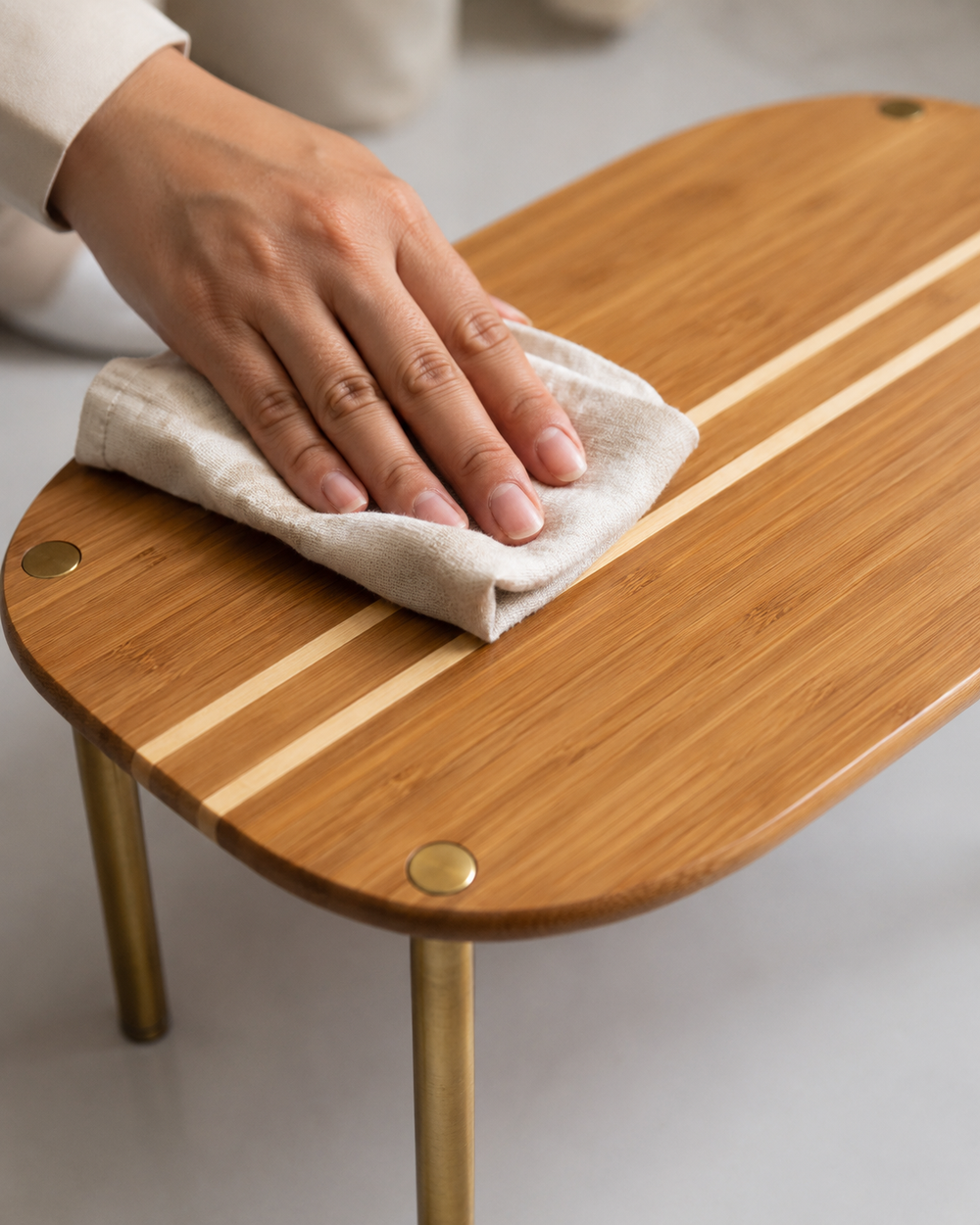
A soft cloth,
warm water.
For everyday cleaning, a damp microfiber and a drop of mild soap are all you need. Wipe along the grain, not against it. Crumbs and dust come off with a dry brush, no soap required.
If something sticky has set, leave the cloth on the spot for thirty seconds rather than scrubbing before trying again.
Twenty minutes,
twice a year.
Bamboo and solid wood are alive in slow motion. They drink in oil, they exhale it back out. A short re-oil keeps the grain closed and the colour deep.
Use a food-grade mineral oil, or a board-cream blend of mineral oil and beeswax. Both are safe, both are cheap, both work.
- iWash and dry, fully.Warm soapy water, soft cloth. Leave the piece on edge for at least an hour — the wood must be dry to the touch on every face before you start. Oil over moisture traps it.
- iiPool a tablespoon.Pour roughly a tablespoon of mineral oil onto the surface. Rub it in with a clean lint-free cloth, along the grain. Cover every face, including the underside and the edges.
- iiiLet it sit, fifteen minutes.Walk away. The oil needs time to draw into the open pores. If the surface looks completely dry inside of five minutes, add a little more.
- ivBuff off the surplus.Wipe away anything that's still wet on the surface with a dry cloth. The finish should feel smooth and dry. If your hand slides off slick wood, you've left too much and need to buff once more.
- vRest overnight, return to service.We let our pieces cure for forty-eight hours before they ship. At home, overnight is enough. By morning the colour will look deeper than the day you bought it.
Two materials,
same rituals.
Our products are made with bamboo and acacia. Both like the same oil and the same dry cloth.
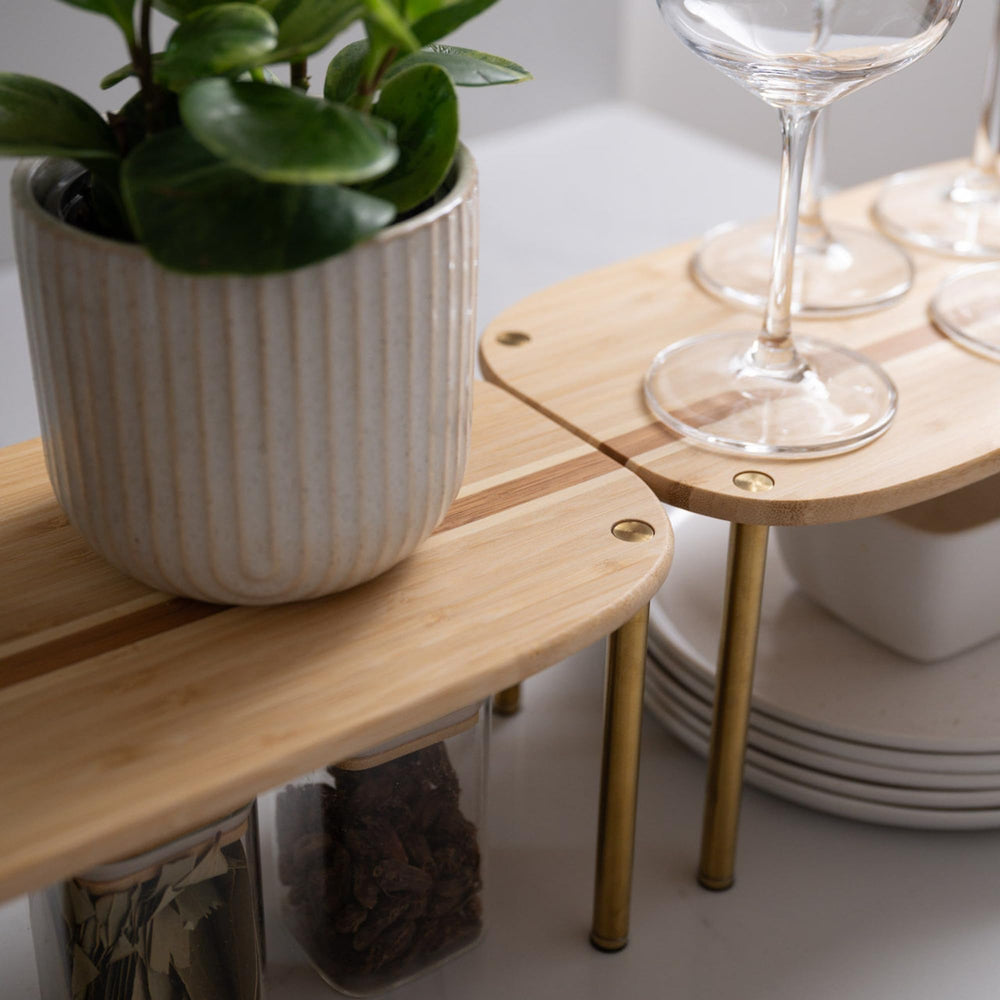
Bamboo, edge-grain.
- Re-oil
- Every 8–12 months in normal use
- Watch for
- Hairline pattern changes after the first oil. This is the strips drinking unevenly. Normal. Evens out by the second coat.
- Finish
- Mineral oil. The brown and black pieces are dyed before sealing, treat them the same as natural.
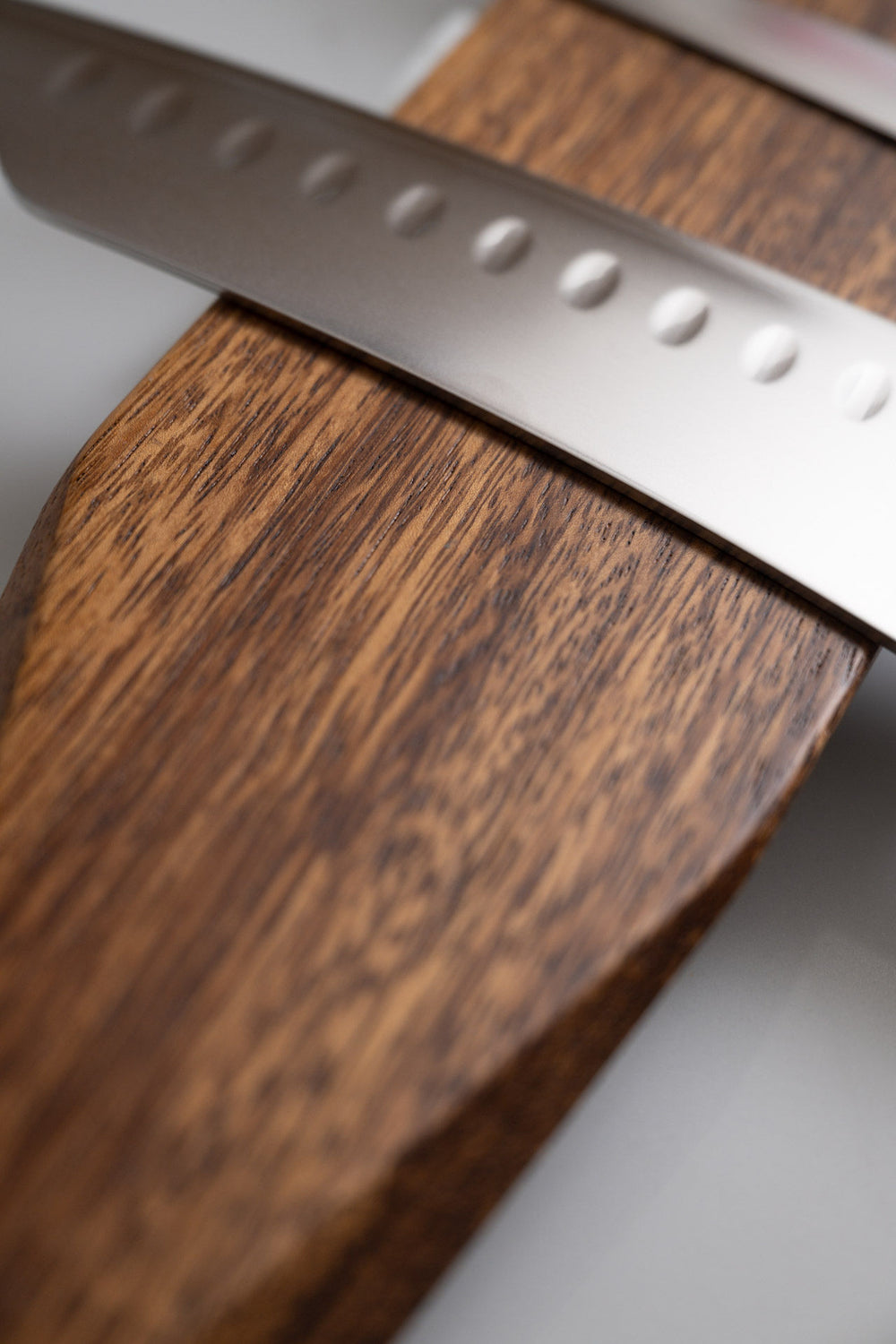
Acacia, solid.
- Re-oil
- Every 6–10 months — acacia is a touch thirstier than bamboo
- Watch for
- Patches of lightening near the sink. A second pass of oil on those areas alone restores the colour.
- Finish
- Mineral oil or a beeswax-blend board cream. Both work; the wax adds a little water beading.
The short list
of things to avoid.
Yes, please.
-
Hand wash, warm waterA drop of mild soap, a soft cloth, wipe along the grain.
-
Dry on edge, fullyAn hour standing up. Both faces breathe at the same rate.
-
Food-grade mineral oilOr a beeswax board cream. Both are inert, both keep the pores closed.
-
Trust the woodPale grain means re-oil. Faint marks fade with use. Don't panic-sand — oil first.
Better skipped.
-
The dishwasherSustained heat plus standing water will cup and warp the panel — sometimes after a single cycle.
-
Soaking in the sinkEven a few minutes submerged is more than the wood wants. Rinse, don't soak.
-
Olive oil or cooking oilsThey oxidise and turn rancid in the grain — sticky surface, sour smell. Mineral oil only.
-
Abrasive sponges, bleachSteel wool, scouring pads, and strong chemicals strip the finish. A soft cloth handles everything wood can throw at it.
A few questions,
answered briefly.
The ones we get most often. If yours isn't here, write to us.
How do I know it's time to re-oil?
The wood will tell you. The colour goes flat — greyer, paler, less depth. The grain looks slightly raised after washing. A drop of water will absorb in seconds instead of beading. Any one of those is your signal. In normal use, expect this twice a year.
Can I use cutting-board oil from the hardware store?
Yes — as long as the label says food-grade mineral oil, with or without beeswax. Avoid anything labelled "wood finish", "wood stain", or "polyurethane". Those are surface coatings, not nourishing oils, and they'll seal in moisture rather than letting the wood breathe.
The colour has gone uneven. Is it ruined?
Almost certainly not. Uneven colour is the wood asking for oil unevenly — the parts that see more water are drier. Give it a re-oil, paying extra attention to the lighter areas. Two coats spaced a week apart usually returns it to even.
There's a small mark or scratch. Can I sand it out?
For surface marks, oil first — many disappear once the grain is rehydrated. If a scratch is still visible after a re-oil, you can sand it lightly with 400-grit, along the grain, then re-oil. We'll send a small finishing sheet if you write to us; it's easier than tracking down the right grit.
It picked up a smell from something I stored on it.
Sprinkle coarse salt across the surface, cut a lemon in half, and rub the cut side over the salt in slow circles. Leave for ten minutes, rinse, dry, re-oil. Works for onion, garlic, fish, and anything else that left an opinion behind.
What if I want to give a piece a deeper refresh?
Once a year, you can sand the whole top surface with 320-grit, wipe clean, and re-oil twice with twenty-four hours between coats. The piece will look the day you bought it. We do this on the workshop bench every January, on every personal piece we own.
Still have questions?
Write to us.
We'll write back within 48 hours.
Email the workshop